

In short
Working 12-hour shifts over Christmas is hard on the body, and small habits make a real difference. This guide shares easy, practical comfort tips for ward staff: what to pack, what to wear under scrubs in winter, how to look after your feet and hands, and how to rest properly afterwards.
- Pack your shift bag the night before, with real food and a water bottle.
- Wear a short-sleeved base layer and take your jacket off for patient care.
- Actually leave the ward on your break.
- Change out of uniform before heading home.
⏱ Reading time: 9 minutes
If you're on the roster this Christmas, first of all: thank you. While most people are arguing over the last roast potato, you'll be doing obs, answering call bells and making someone's hardest day a little easier. That deserves more than a tin of chocolates at the nurses' station.
This guide is the practical, look-after-yourself side of 12-hour shifts over the festive period. It isn't about festive outfits (our winter scrub tips and festive finds cover that). It's the small, doable things that leave you a bit warmer, a bit less sore and a bit more like yourself when you get home.
The night before: set yourself up
The easiest 12-hour shifts tend to start the evening before. Ten minutes of prep means you're not scrabbling for a clean top at 6am or living on vending machine crisps by lunchtime.

Your winter shift bag
- Two proper meals and snacks
- Refillable water bottle
- Spare pair of socks
- Spare base layer
- Hand cream and lip balm
- Phone charger
- Hair ties
- A treat for the hardest hour
Before you leave home
Lay out a clean uniform, eat a decent meal, set two alarms and sort your journey. Public transport is limited over Christmas, so arrange your lift or parking early.
Working nights? Try to have a short sleep before your first one, even if the house is full of family. Tell everyone it's your "Christmas nap" and close the door.
What to wear under scrubs in winter
Draughty corridors, a 3am drop in the heating, doors opening onto the car park: wards can feel properly cold in December. The tempting answer is a cosy long-sleeved top, but that runs into a rule most clinical staff know well.
Start with bare below the elbows
Good to know
If you give direct patient care, you need to be bare below the elbows. The national Guidelines for Hand Hygiene in Irish Healthcare Settings, published with the HSE, ask staff to remove watches and wrist jewellery, keep to a single plain band and bare the wrists with a short-sleeved top or rolled-up sleeves, so hands and wrists can be cleaned properly.
Each hospital builds its own dress code on this. Some accept long sleeves rolled up above the elbow in clinical areas, others don't allow them at all, so check your local policy.
So the trick is to keep your core and legs warm, and leave your forearms free. For more on winter workwear in general, see our guide to nurse uniforms that keep you warm without feeling bulky.
Easy ways to stay warm (and stay within policy)
Start with your core. A fitted short-sleeved layer under your scrub top traps a surprising amount of warmth and keeps your forearms free for handwashing. Arrive wrapped up and peel off at the ward door, so you begin the shift warm rather than chilled, and keep a dry spare in your locker in case you get caught in the rain on the way in. On night shifts, thin leggings under your scrub trousers make a real difference too, if your policy permits them.
This is where a good underscrub earns its place. The Koi Essentials Tender Women's Tee is a soft, long-sleeved layer made from a cotton, modal and spandex jersey, light and stretchy enough to sit under your scrub top without adding bulk. Wear it on the journey in, through handover and on your breaks, then push the sleeves up or swap to short sleeves before patient care, depending on what your hospital allows. It washes at up to 60°C, so it goes in with the rest of your uniform.
For the cold walk between buildings or a quiet hour writing notes, keep a jacket on the back of your chair and take it off before direct patient care. The Koi Cureology Geneses Women's Scrub Jacket and the Koi Cureology Alpha Men's Scrub Jacket zip up in seconds. If you run cold, the Velilla Unisex Perth Fleece Scrub Jacket is a cosy, budget-friendly choice, and the Velilla Unisex Stretch Soft Shell Gilet keeps your core warm with no sleeves at all. Check whether your hospital allows outer layers in clinical areas.
Look after your feet, legs and hands
Your feet carry you through every one of those twelve hours, and in winter they often start the shift cold and damp. A few small swaps help.
Keep work shoes at work
Walk in wearing boots or trainers, then change into your work shoes on the ward so they stay dry.
Change your socks halfway
Fresh, dry socks at your break feel like a small luxury on a long night.
Rotate two pairs
On a run of shifts, alternate two pairs of shoes so each one has time to dry out.
Stretch while you wait
A few calf raises while the kettle boils, and a shoulder roll after a long spell at the computer.
Closed, supportive shoes with a grippy sole are the base of it all. Theatre-style clogs like the Suecos Oden Theatre Clogs slip on easily and wipe clean.
Plenty of staff also like compression socks for long days on their feet. If you have a circulation condition, check with your GP or Occupational Health which type suits you.
Don't forget your hands
Constant handwashing plus cold air outside leaves skin dry and sore by the end of a run of shifts. Use hand cream on your breaks and after work, and speak to Occupational Health if your skin cracks or won't settle.

Breaks, food and drink on a 12-hour shift
Breaks are the first thing to disappear when a ward is stretched, especially with half the team off for Christmas. They matter, though, and you're entitled to them. Under section 12 of the Organisation of Working Time Act 1997, you're entitled to a 15-minute break after four and a half hours and a 30-minute break after six hours, which can include the first one. Hospitals can move breaks around where patient care demands it, but only if you get equivalent compensatory rest, so a missed break should never simply disappear. Many contracts give more than the legal minimum, so check yours.
The single most useful habit is to actually leave the ward. Eating at the nurses' station isn't a break. Sit somewhere else, put your feet up and put your phone down for five minutes. If you're in charge, write break times on the board at the start of the shift so nobody has to ask. Staff rooms and canteens can be chilly at 3am, so pull on your long-sleeved underscrub or jacket while you're off the ward and let yourself properly warm up before you head back.
Food and drink work best little and often. The Health and Safety Authority's guidance on night and shift work recommends regular light meals, because heavy meals can make you drowsy, so a flask of soup at 3am beats a heavy plate of leftovers. Tie drinking to something you already do, like taking a few sips every time you sit down to write notes. The HSE's advice is simple: drink enough during the day so your pee is pale yellow. Heated wards dry you out more than you'd think. Avoid caffeine in the few hours before you plan to sleep, and save a small treat for the hardest hour. It's a tiny thing that makes 4am feel a little kinder.
After the shift: winding down and sleeping well
The Health and Safety Authority (HSA) points out that night work disrupts your body clock, which leads to lost and disturbed sleep, and that the risk of errors and accidents is higher on night shifts. A gentle routine helps your body know the shift is over.
Change before you leave
Pop your uniform into a scrub laundry bag and head home in your own clothes. It keeps the ward at work and helps you switch off.
Get home safely
Don't drive if you're overtired. Share a lift, book a taxi or rest before you set off.
Make your room a cave
Blackout blinds or an eye mask, earplugs, phone on do not disturb.
Reset after your last night
Have a short sleep, then go to bed a little earlier that evening.
Tell the household your plan
Even on Christmas Day or St Stephen's Day, a sign on the door saying "asleep until 2pm" is perfectly reasonable.
If you work nights, you should be offered a health assessment before you start and at regular intervals after that. If nights are starting to affect your health, talk to your manager, who can refer you to Occupational Health. Managing fatigue is your employer's job too, not just yours.
Making Christmas on the ward feel like Christmas
Working Christmas doesn't mean missing it completely. Agree a shared food plan so nobody turns up with the same tin of biscuits, ask family to save you a plate, and schedule a quick video call on your break.
Keep an eye out for colleagues spending their first Christmas away from home, and a festive touch within policy can lift the whole team. If the season is weighing on you, our article on supporting wellbeing on the ward has a few ideas.
A little extra comfort this Christmas
Whether you're treating your team to something festive or looking for a small thank you for the colleague who covered your break, our Christmas collection has seasonal scrubs in hunter, wine and cheerful winter prints.
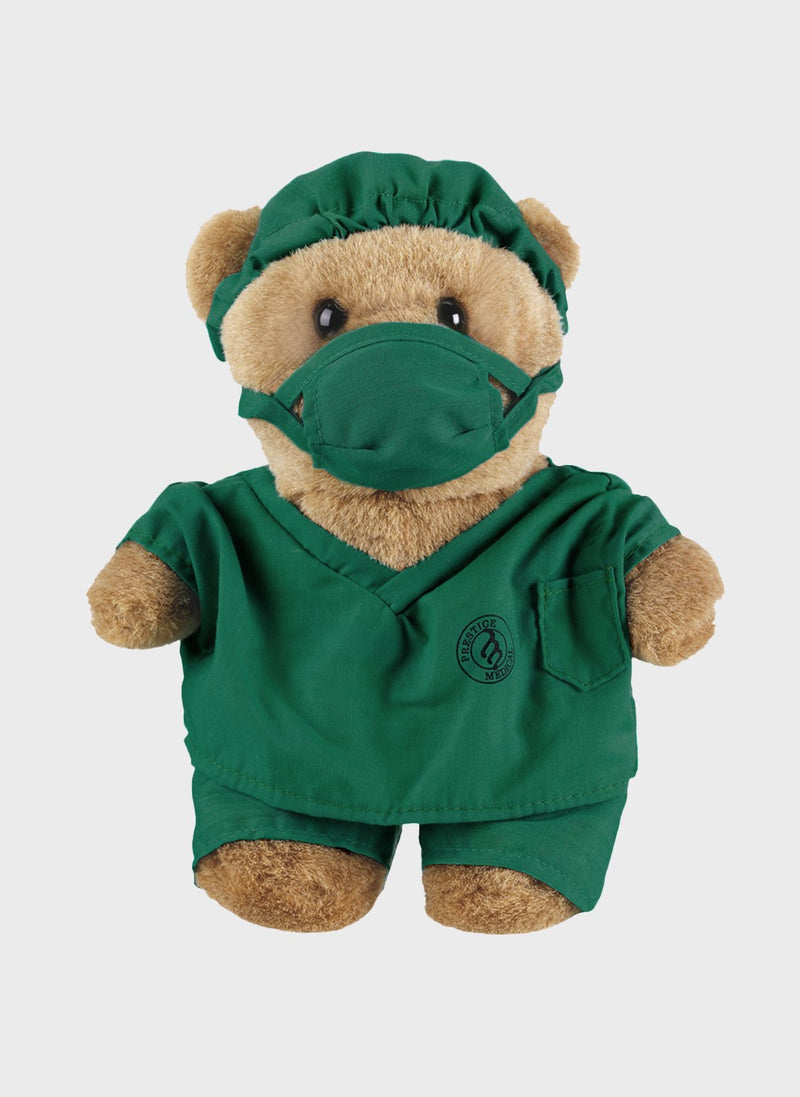
And for a bit of comfort after a run of nights, meet the Prestige Dr. Scrubz Teddy Bear. He's a soft, 10-inch bear in green scrubs with a matching cap and mask, ready to sit waiting at home for you or to cheer up a colleague as a Kris Kindle gift.
Most of all, be as kind to yourself as you are to your patients. More than 10,000 healthcare professionals trust Happythreads for their uniforms, and if your winter kit needs a refresh, our women's scrub layers and men's scrub layers are a good place to start.
FAQ
What should I wear under scrubs in winter?
A fitted short-sleeved base layer under your scrub top, thin leggings under your trousers if your policy allows, and a scrub jacket or fleece for corridors and breaks. Remove the jacket before direct patient care.
Can I wear a long-sleeved top under my scrubs?
Only if your hospital's uniform policy allows it. Clinical staff must be bare below the elbows during direct patient care, so most wards either ban long sleeves or require them rolled up above the elbow.
How many breaks do you get on a 12-hour shift in Ireland?
Under the Organisation of Working Time Act 1997, the minimum is a 15-minute break after four and a half hours and a 30-minute break after six hours, which can include the first. Many contracts give more, so check your contract and local policy.
How can I stay comfortable on a 12-hour night shift?
Sleep before your first night, pack real food and eat little and often, keep drinking fluids, change your socks halfway and layer up for cold corridors. Never drive home if you feel drowsy.